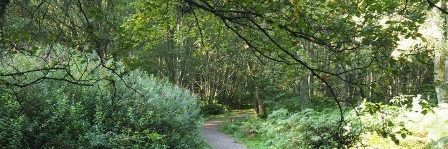
The CBMCC Footpath Group is an active group that works to publicise local walks, maintain and improve our local paths network, organise working groups, raise access issues, and contribute to planning discussions in respect of local routes and pathways.
The objectives of the group are to increase awareness of local walks, encourage walking for health and recreational purposes, increase pedestrian access to local woodlands and parks, and involve residents in volunteering and cooperating in outdoor activities.
Volunteers needed - Your community needs you!
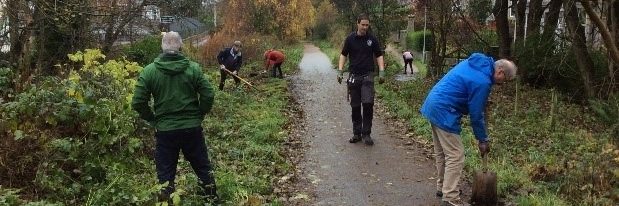
The Footpath Group of the Cults Bieldside and Milltimber Community Council is keen to recruit volunteers to assist in maintaining and improving footpaths in the area. There is no regular commitment, but if you add your name to our list of volunteers, we will send you regular reminders of the dates of our work parties (normally 2 to 3 hours) and make you very welcome on the dates that you choose to attend.
Round Up of 2025 Activities
2025 was another busy year for the Footpath Group, which held 30 events addressing path maintenance, assistance to the Inchgarth Biodiversity Project and cutting back the invasive and rapidly spreading Himalayan Balsam. Disappointingly, there has been a significant reduction in the participation of our volunteers, which dropped from 285 hours in 2024 to 146 in 2025.
In all, over 9 kilometres of footpaths were maintained and several thousand square metres of scrub, gorse, broom, reeds and balsam were cleared, through the use of our 2 strimmers. The addition of our second petrol strimmer in 2025 was a great help in achieving a notable improvement in our clearance productivity.
We carried out path clearance, tree lopping and balsam bashing on all of our regular paths and also in a new area for us, along the riverside path at Newton Dee, in order to improve access for walkers.
The new path we created in 2024, along the bund between the Shakkin' Briggie viewing platform and the reservoir, has proved to be a very popular route with walkers. In 2025, we continued our work on this route by removing several hollows, bumps, trip hazards and low branches, and we have also created several new built-up and reinforced sections to widen the path and reduce the side slopes. We have a few further improvement ideas that we aim to implement in the future when we have sufficient manpower.
In 2024, we reported that a blocked culvert near the Deeside Way near Old Ferry Road, which was the cause of frequent flooding, had been cleared and repaired. These repairs proved inadequate, and throughout autumn 2025 and into winter, the Deeside Way was subject to major floods at this location. Aberdeen City Council engaged a contractor to carry out initial cleaning of a very blocked culvert, which has now been cleaned out, and the flooding has cleared. Further improvements to clear localised flooding on either side of the path and additional cleaning of the culvert outlet has been planned to be carried out in early 2026. This progress has resulted from the sustained efforts of key individuals in the Council, Newton Dee and the Footpaths group working together.
We continue to liaise with local landowners to address issues or proposed improvements to our footpath network; one possibility for 2026 is an improvement to access across the burn to the grassy area by the riverbank at Milltimber.
Himalayan Balsam continues to spread rapidly along the Dee. Although attractive, its effects are very harmful, with aggressive seed dispersal (shooting its seeds up to 7 metres); high nectar production attracting pollinators to the detriment of native plants; and river bank erosion as it dies back over winter, leaving the bank unprotected from flooding. 'Balsam Bashing' (a therapeutic activity) is therefore vital over the summer months. A working team representing various landowners, users & other interested parties in Lower Deeside was formed to investigate a coordinated and targeted approach for dealing with this, and in March 2025, a meeting was held to try to achieve a coordinated approach. The hope was that groups would adopt specific stretches of the riverbank and visit on a regular basis during the season to remove areas of Balsam. Unfortunately, despite a good response by email, very few people came to the meeting, although it did succeed in creating a comprehensive map of where the worst areas of Himalayan Balsam were known at that time.
Going forward, work is ongoing with The River Dee Trust and The Habitat People (who manage invasive species in other areas of the river catchment) to launch an award programme for Himalayan Balsam management, which will be called “The Balsam Cup”. The aim is to recruit more people to do this work and compete to clear areas of this invasive species. The Footpaths Group will aim to be a key partner in this work.
The 2026 programme of dates and activities, including Inchgarth Biodiversity Initiative & Balsam Bashing, will run from Spring through to late autumn and will be publicised on this page.